

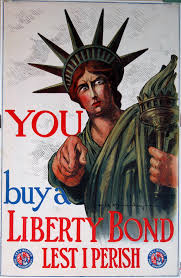
After listening to both podcasts, one thing was very clear, propaganda didn’t go away, it just got better at what it was always trying to accomplish. Nowadays you can see it in your TikTok feed, instagram reels, and X feed, but it’s more subtle and personal.
Modern propaganda is so powerful because it doesn’t always feel like it’s trying to mislead you. It often looks like regular content, like something funny, sad, dramatic, or even useful. That’s why it works so well. People don’t always stop to think about whether a post is true if it already aligns with what they think or makes them feel strongly.
What I noticed while listening to the podcasts, what makes modern propaganda so powerful is that it doesn’t feel like propaganda. It feels like content you want to engage with.
From Posters to TikTok: Same Strategy, New Platform
One of the most important things I’ve learned from the podcasts is that the basic methods of propaganda haven’t really changed. The techniques have changed in terms of how fast, how far, and how personal they are. Governments used things like speeches, films, and posters to make people feel things like fear, pride, and patriotism during World War I. Those messages were carefully crafted to win people over and change their minds. Social media does the same thing today, but quicker and more accurate.
One misleading post can reach millions of people in just a few hours, compared to one poster hanging on a wall. Content that gets reactions gets recognized by social media platforms, which means that posts that are emotional or controversial often get more views than posts that are factua; or balanced. That is what makes modern propaganda so divise.
The Most Divisive Techniques (That you Probably See Every Day)
1. Emotional Manipulation:
A lot of online content is made to make people feel things quickly, like anger, fear, and outrage. When people feel strongly about something, they are more likely to like, comment, repost, or share it without checking to see if it’s true. Tandoc, Lim, and Ling (2018) say that fake news spreads because it makes people feel something, not because it is true or reliable. That idea explains why emotional propaganda works well on the internet, people react before they think about it.
This idea is not new. As discussed in the Civics 101 podcast episode on propaganda, emotional appeals and repetition are key to influence an audience, which are still seen in today’s social media environment.
Quick Note: If a post makes you angry, scared, or panicked immediately, the person who wrote it may have wanted you to feel that exact way.
2. Echo Chambers and Confirmation Bias

Another big problem is that social media makes people believe what they already believe even more. Algorithms are designed to keep people interested, so it will show people content that is similar to what they have liked in the past. This can lead to an echo chamber where people keep seeing the same kinds of opinions and points of view over time. The Pew Research Center (2021) say that social media can make politics more polarized because people often see posts that fit with what they already believe. That makes it harder for people to understand other people’s points of view and easier for division to grow.
3. Fake Credability
Digital propaganda can look very polished, which is one of the scariest things about it. False or misleading content often sounds and looks like real news. It could have charts, language that sounds like an expert, dramatic headlines, or smooth visuals that make it seem trustworthy. When false information looks professional, a lot of people think it’s true. This makes it very hard for people to tell the difference between news that is true and news that is meant to trick them.
This video below explains how false news can spread online and gain credibility by being shared over and over again. This will help you understand how misinformation spreads in today’s digital world.
So What Does This Mean For PR?
This is important for public relations since PR professionals are a part of how people talk to each other today. It is their job to create and share ideas that change how people think, which means they also have a moral duty to not add to confusion or conflict. In a world full of false information, quickness can’t be more important than accuracy.
Values including honesty, expertise, and fairness are shown in the PRSA Code of Ethics (Public Relations Society of America, n.d.). These values are important in situations when misinformation spreads quickly and communication occurs in real time. Incomplete, exaggerated, or emotionally manipulated content can attract attention in the near term for a public relations professional, but it can get rid of trust over time.
Additionally, PR professionals must consider more than just creating a message. When false narratives are spreading, they should be ready to correct misinformation, give context, and communicate effectively.
According to Harvard Kennedy School shows that communication strategies like providing clear, credible information can help address the spread of misinformation (Harvard Kennedy School, n.d.).
Final Thoughts: Not Everything That Goes Viral Is True
In the end, propaganda stayed after World War I. It evolved into a whole new problem. Social media made it faster, harder to recognize, and more targeted. We are surrounded by emotional manipulation, echo chambers, and fake credibility, all of which influence how people view issues, organizations, and each other
The lesson for PR professionals is straightforward but crucial, don’t sacrifice the truth in trying to go viral. Communicators who take their time, double-check their knowledge, and consider the consequences of their words are the most moral and successful. What you say and how you say it is more important than ever in a world where everyone is always scrolling.
References:
Tandoc, E. C., Lim, Z. W., & Ling, R. (2018). Defining “fake news.” Digital Journalism, 6 (2), 137-153. https://www.tandfonline.com/doi/full/10.1080/21670811.2017.1360143
Pew Research Center. (2021). Political polarization and social media. https://www.pewresearch.org/topic/politics-policy/political-parties-polarization/political-polarization/
Harvard Kennedy School Misinformation Review. (n.d.). Home. https://misinforeview.hks.harvard.edu/
Public Relations Society of America. (n.d.). PRSA Code of Ethics. https://www.prsa.org/professional-development/prsa-resources/ethics#code
Civics 101. (2022, November 29). Propaganda [Audio podcast episode]. https://www.civics101podcast.org/civics-101-episodes/propaganda
 Site Title
Leave a comment